This article was generated by artificial intelligence and reviewed by Le Pivot's editorial team. We believe in transparency.
Araghchi Flies to Moscow, Hormuz Holds: Iran–US Conflict Searches for an Exit on Day 59
By Le Pivot — Iran Monitor · April 26, 2026 · 10 min read
On day 59 of the armed conflict between the United States, Israel, and Iran, diplomacy is undergoing a new geographic pivot: after the crushing failure at Islamabad, Iranian Foreign Minister Abbas Araghchi has headed to Moscow to meet President Vladimir Putin. Meanwhile, the Strait of Hormuz remains under dual blockade, and reports have emerged of a secret Iranian offer — reopening the strait in exchange for a freeze on nuclear talks. Donald Trump, for his part, has distilled his diplomacy into one line: “They can call us.”
1. The Moscow Pivot: Araghchi Seeks a Mediator
After leaving Islamabad empty-handed on April 25 — without having met directly with US envoys Steve Witkoff and Jared Kushner — Abbas Araghchi changed his diplomatic itinerary. His next destination: Moscow, for talks with Vladimir Putin.
The choice of Moscow is deliberate. Russia, which has maintained close economic and military ties with Tehran despite Western pressure, is one of the few interlocutors capable of speaking to both sides. Following the talks, Russia’s envoy was blunt: the United States must abandon “blackmailing” and “ultimatums” for negotiations to advance. This framing mirrors Tehran’s own narrative, but also signals that Moscow is prepared to play an active facilitating role — provided Washington brings its demands down to what it considers an acceptable level.
The visit is part of a broader regional tour that Araghchi described as “very productive” during his Islamabad stop, despite appearances to the contrary. Tehran maintains that diplomatic channels are open; Washington says the same, on condition that Iran makes the first move.
2. The Secret Offer: Hormuz for a Nuclear Freeze
According to sources cited by the Times of Israel, Tehran reportedly transmitted to mediators a proposal representing a notable shift from previous positions: Iran would be prepared to reopen the Strait of Hormuz and end hostilities, on condition that discussions on the nuclear program are deferred to a later phase.
This offer reveals the geometry of mutually acceptable concessions. For Iran, the nuclear question is existential — the regime cannot sign a complete dismantlement agreement without triggering a major domestic political crisis. For Washington, the stated objective of the conflict was precisely to obtain guarantees on the nuclear program. Deferring that discussion means accepting an imperfect victory.
But on the American side, economic urgency is real: Brent crude exceeds $115 per barrel, fuel prices across Europe have surged, and the Bank of England is holding emergency meetings on macroeconomic impact. British Prime Minister Keir Starmer acknowledged that “the economic consequences could still be with us for some time.” A rapid unblocking of the strait, even temporary, would carry considerable political value for G7 countries.
Trump, meanwhile, has maintained an ambiguous posture: he says Iran “can call us,” but reiterates that Iranian nuclear possession is off the table. This formula — open on process, closed on substance — leaves little room to maneuver.
3. The Dual Blockade: 38 Ships Turned Back, 4 Million Barrels Smuggled
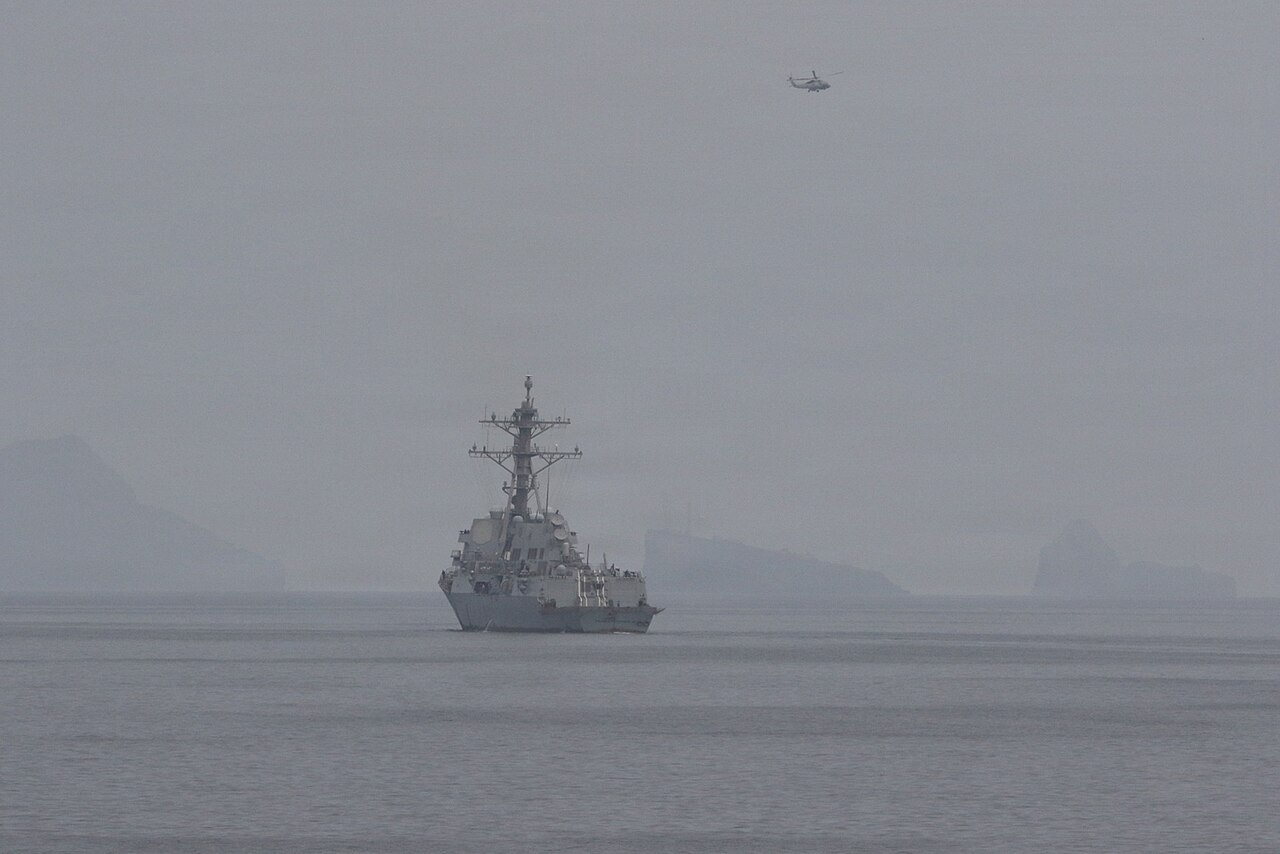
On the maritime front, the situation is evolving on two parallel tracks. The US blockade of Iranian ports, imposed on April 13, has now forced 38 vessels to turn around or return to their home ports. The objective is to strangle Iranian exports — oil, petrochemicals, metals — to force Tehran to the negotiating table.
But Iran is countering with its own strategy: the shadow fleet. According to data cited by The National, Iran reportedly managed to smuggle more than four million barrels through the US naval cordon since the blockade began. The vessels involved are tankers operating under flags of convenience with AIS transponders switched off — an operational mode refined since the first rounds of sanctions in 2018.
The Islamic Revolutionary Guard Corps (IRGC) has simultaneously reaffirmed its position in an unambiguous statement: “Controlling the Strait of Hormuz and maintaining the shadow of its deterrent effects over America and the White House’s supporters in the region is the definitive strategy of Islamic Iran.” Such a declaration closes the door on any unilateral reopening — and suggests that even a diplomatic agreement would need to include explicit security guarantees before the Guards would release their grip on the passage.
Iran and Oman have additionally agreed to continue expert consultations on safe maritime transit — a discreet diplomatic channel that could eventually serve as an implementation mechanism if a deal is reached.
4. Civil Society: More Executions, a Woman on Death Row
While diplomacy searches for formulas, Iran’s repressive machinery continues to operate in the background. Two new executions were documented within 48 hours:
Erfan Kiani, a young man from Isfahan, was executed on April 25. The charge: acts of destruction during protests. Amer Ramesh, a Baluch political prisoner, was hanged on April 26, accused of membership in an armed group.
More alarming still: the case of Maryam Hodavand, 45 years old, the third female protester sentenced to death. She awaits execution without having had access to adequate legal counsel — a direct violation of minimum fair-trial standards documented by human rights organizations.
In parallel, the case of Dr. Ameneh Soleimani illustrates the broadening of repression to include liberal professions: this physician faces the death penalty for treating injured protesters. Four other doctors have been arrested on similar grounds. This criminalization of medical care constitutes a grave violation of international humanitarian law, flagged by the NCRI.
Since the outbreak of open conflict in late February, executions of political prisoners have accelerated according to rights defense groups. The context of the major protests of December 2025–January 2026 — described as the largest uprising since the 1979 revolution with 7,015 confirmed deaths — has yet to lead to any accountability from the regime.
5. The Khamenei Factor: A Supreme Leader Still Invisible
One element continues to cloud the diplomatic picture: Mojtaba Khamenei, appointed supreme leader on March 9, 2026, following his father’s death in the February 28 strikes, has still not made a verifiable public appearance. Reports suggest he survived the strikes but with serious injuries, and that he has delegated a significant share of operational authority to senior IRGC commanders.
This de facto delegation transforms Iran’s decision-making structure into a more collegial military leadership — and potentially one harder to bring to compromise. Where his father Ali Khamenei arbitrated between civilian and military factions, Mojtaba’s absence leaves the field open to the Guards, whose institutional interest lies in maintaining a position of strength.
Key Takeaways
April 27 marks a diplomatic realignment: after the Pakistani impasse, Iran is seeking to involve Russia as a counterweight to American pressure. The secret offer to reopen Hormuz in exchange for a nuclear freeze may represent the most substantive proposal since the conflict began — but its very formulation reveals the limits: Tehran cannot sign on the nuclear question without jeopardizing its political survival.
On the American side, global economic pressures — crude at $115, emergency central bank meetings, energy price inflation in Europe — could eventually weigh more heavily than tough-talk rhetoric. If Trump decides that unblocking Hormuz is worth a tactical pause on the nuclear file, a partial deal becomes conceivable. But for now, both sides remain in their preferred posture: waiting for the other to blink first.
Sources
- Al Jazeera — Day 59: Araghchi to meet Putin, diplomatic push continues (April 27)
- Al Jazeera — Iran war live blog (April 27)
- Times of Israel — Iran said to offer deal to reopen Hormuz (April 27)
- The National — Iran sneaks 4 million barrels through US blockade (April 25)
- NCRI — Iran News in Brief, April 27, 2026
- Wikipedia — 2026 Strait of Hormuz Crisis
- Amnesty International — Protesters at risk of imminent execution (March 2026)
- Euronews — Tehran accelerates executions since start of Iran war (April 8)