This article was generated by artificial intelligence and reviewed by Le Pivot's editorial team. We believe in transparency.
Islamabad Fails, Hormuz Holds: The Iran–US Conflict Stalls at Day 58
By Le Pivot — Iran Monitor · April 25, 2026 · 10 min read
On day 58 of the armed conflict between the United States, Israel, and Iran, hopes for a diplomatic breakthrough in Islamabad collapsed within 24 hours. Iranian Foreign Minister Abbas Araghchi left Pakistan after transmitting a position framework to mediators — without directly meeting American officials. In response, Donald Trump cancelled the mission of Steve Witkoff and Jared Kushner, deeming the Iranian offer insufficient. Tehran replied that it will not negotiate “under duress.” Meanwhile, the Strait of Hormuz remains the scene of a dual maritime blockade, Brent crude has surpassed $115 per barrel, and inside Iran, the repressive machinery keeps turning.
1. The Second Islamabad Round Falls Apart
The sequence reveals the mutual distrust that paralyzes both sides. Araghchi arrived in Islamabad on April 25, officially for “regional consultations.” He handed Pakistani mediators a document outlining Iran’s position — rejection of full nuclear dismantlement, demands for security guarantees, and opposition to any ballistic missile limitations. Pakistan was to relay these positions to the Americans.
But Trump, concluding that the Iranian offer was moving in the wrong direction, announced that Witkoff and Kushner would not travel to Islamabad. He added that negotiations would continue “by phone” — a formulation that, diplomatically, amounts to a de facto freeze on in-person talks.
On the Iranian side, President Pezeshkian was unambiguous during a phone call with Pakistani Prime Minister Shehbaz Sharif: Tehran will not sit at the table as long as “pressure and threats” persist. The formula captures the deadlock: Washington maintains its naval blockade and sanctions as leverage, Tehran refuses to negotiate under those conditions.
The first Islamabad round, held April 11-12, had already failed after 21 hours of discussions, with no agreement on the two fundamental issues: Iran’s nuclear program and the status of the Strait of Hormuz.
2. The Dual Hormuz Blockade: Oil at $115, Economy Under Pressure
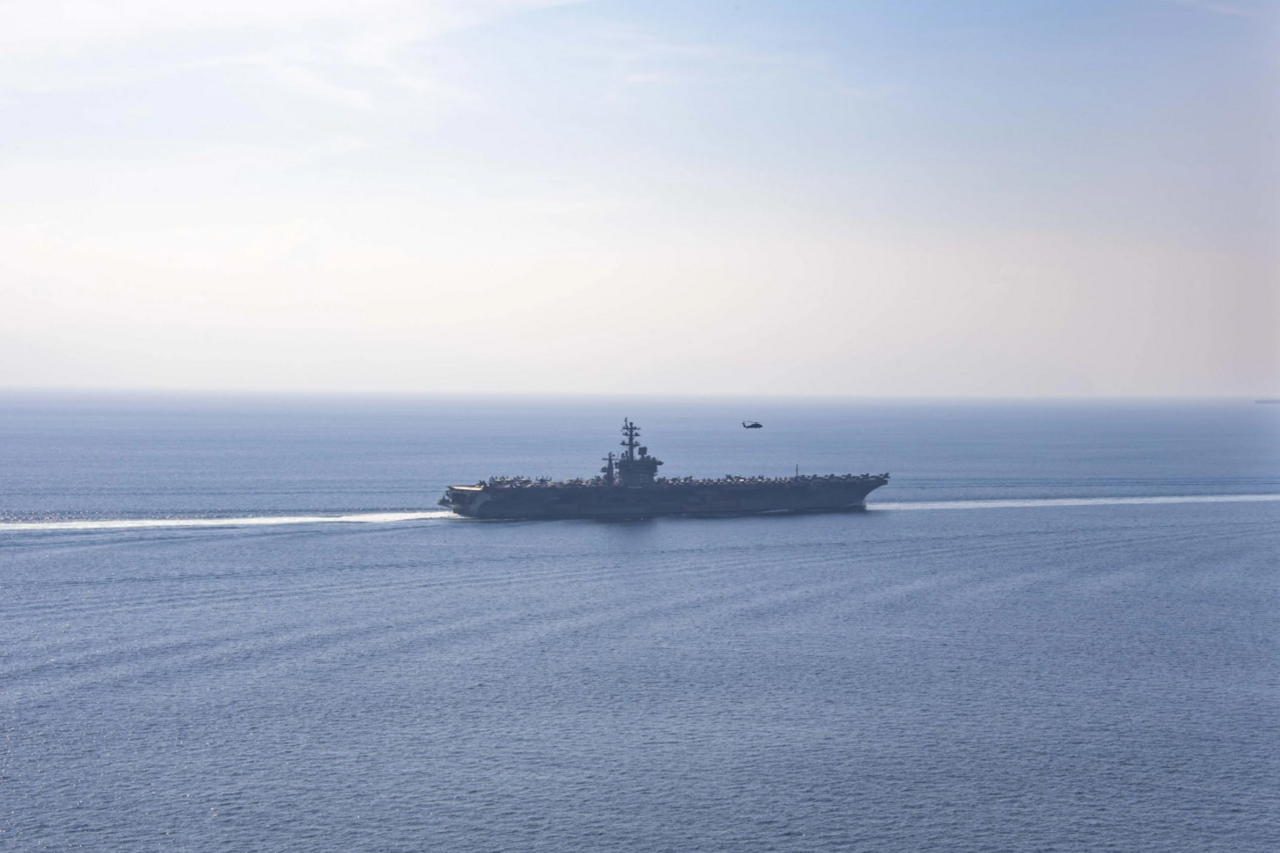
Since April 13, the United States has imposed a naval blockade on Iranian ports. Iran, for its part, has controlled traffic through the Strait of Hormuz since February 28 — demanding transit fees exceeding one million dollars per ship and having laid mines in the strait. The two blockades now overlap in what amounts to a low-intensity naval war under cover of a land ceasefire.
The economic consequences are considerable. Before the conflict, the Strait of Hormuz carried approximately 25% of the world’s seaborne oil trade and 20% of global LNG. Brent crude has reached $115 per barrel, with Goldman Sachs projecting up to $130 if the blockade persists through the summer. Inside Iran, crude reserves are reaching maximum storage capacity due to the inability to export — additional pressure on an already strangled economy.
For Iran’s population, the reality is rising food prices and sharply rising unemployment. CNN’s analysis captures the situation in one line: Iran is suffering in a standoff with the United States, but may be betting that Trump will blink first.
3. Mojtaba Khamenei: The Invisible Leader Delegates to Generals
More than seven weeks after being designated supreme leader on March 9, 2026, Mojtaba Khamenei has still not appeared publicly. His last known appearance predates the February 28 strikes on the Khamenei family residence, which killed his father, Ali Khamenei.
Reports indicate he survived the strikes but with serious injuries — a prosthetic leg and facial plastic surgery. The regime reportedly used AI-generated videos to broadcast his messages, fueling speculation about his actual condition. According to The Defense News, Mojtaba Khamenei has delegated significant operational authority to senior Islamic Revolutionary Guard Corps (IRGC) commanders.
This de facto power transfer to IRGC generals is reshaping Iran’s decision-making structure: where Ali Khamenei arbitrated between civilian and military factions, his son’s physical absence leaves the field open to a more collegial — and potentially more rigid — leadership by the Guards.
4. Domestic Repression: Wave of Political Executions
While diplomacy stalls, internal repression intensifies. Human Rights Watch warned in early April that “thousands of prisoners are at risk.” Documented executions since the start of the month number in the dozens.
Among the most documented cases: Amir Hossein Hatami, 18 years old, protester, hanged on April 2; two more protesters executed on April 5; ten political prisoners executed at Qezel Hesar Prison between March 30 and April 9, including several detainees arrested during the nationwide uprising of January 2026; and PMOI members Hamed Validi and Mohammad (Nima) Masoom Shahi, executed on April 20.
UN Human Rights Chief Volker Türk expressed outrage over the mass arbitrary arrests, expedited proceedings that routinely lack due process, and imposition of the death penalty. Members of the European Parliament demanded an end to international “silence” and recognized the National Council of Resistance of Iran (NCRI) as a democratic alternative.
5. Lebanon Ceasefire Extended
In this tense context, one more stable note: the three-week extension of the ceasefire between Israel and the pro-Iranian Hezbollah in Lebanon, announced on April 23. This respite offers partial de-escalation space on Israel’s northern front, even though the structural causes of the conflict — Hezbollah’s disarmament, troop withdrawal — remain unresolved.
Key Takeaways
April 26 marks a pivotal day in the conflict’s timeline: it is the first time that both Islamabad rounds have ended in documented failure, without even the fiction of “progress” to present to the gallery. Both sides find themselves in a position where de-escalation requires concessions that neither is ready to make publicly.
For Trump, lifting the blockade without obtaining nuclear guarantees would be an admission of weakness; for Pezeshkian and the Guards, accepting full nuclear dismantlement represents an existential capitulation. The Strait of Hormuz, with its 20% share of global energy supplies, remains hostage to this equation — and each additional week of blockade pushes energy prices toward levels capable of triggering a global recession.
Sources
- Al Jazeera — Iran war live: Tehran rejects talks under siege (April 26)
- NPR — Iran’s FM leaves Pakistan, Trump cancels U.S. delegation (April 25)
- CNN — Iran is suffering in a standoff with the US (April 25)
- Al Jazeera — How long can Iran survive the US’s Hormuz blockade? (April 24)
- Fortune — From maritime trench warfare to a ‘sloppy peace’ (April 25)
- CNN — Iran’s new supreme leader is nowhere to be seen (April 21)
- Eurasia — Mojtaba Khamenei delegates power to generals (April 25)
- Human Rights Watch — Iran: Thousands of Prisoners at Risk (April 1)