This article was generated by artificial intelligence and reviewed by Le Pivot's editorial team. We believe in transparency.
Indirect Talks in Islamabad: Hormuz Held Hostage, Tehran Digs In
By Le Pivot — Iran Monitor · April 24, 2026 · 10 min read
On day 57 of the armed conflict between the United States, Israel, and Iran, the operative concept is indirect diplomacy. Steve Witkoff and Jared Kushner are en route to Islamabad to meet — through Pakistani mediation — Iranian Foreign Minister Abbas Araghchi. Tehran’s response is measured: “no direct meeting is planned.” Meanwhile, the Strait of Hormuz remains under a dual blockade, crude oil exceeds $105 per barrel, and inside the country, executions and forced transfers of political prisoners continue unabated.
1. Pakistani Mediation: Between Optimism and Ambiguity
US special envoys Witkoff and Kushner arrived in Islamabad on April 25. Iran sent Foreign Minister Araghchi, officially for “regional consultations.” Iran’s Foreign Ministry spokesman nonetheless clarified that no direct meeting with Washington was planned — Iranian positions would be conveyed through Islamabad.
Pakistani mediators describe themselves as “cautiously optimistic.” Trump, for his part, stated he could “make a deal right now” with Tehran, provided it is “everlasting.” Positions remain far apart: Iran demands the lifting of the US naval blockade and the unfreezing of $6 billion in frozen assets before returning to the negotiating table. Washington conditions any relief on guarantees regarding the nuclear program and Tehran’s renunciation of Hormuz transit fees.
Iran frames the situation sharply: the United States is “looking for a face-saving way to escape the war quagmire it has become trapped in.”
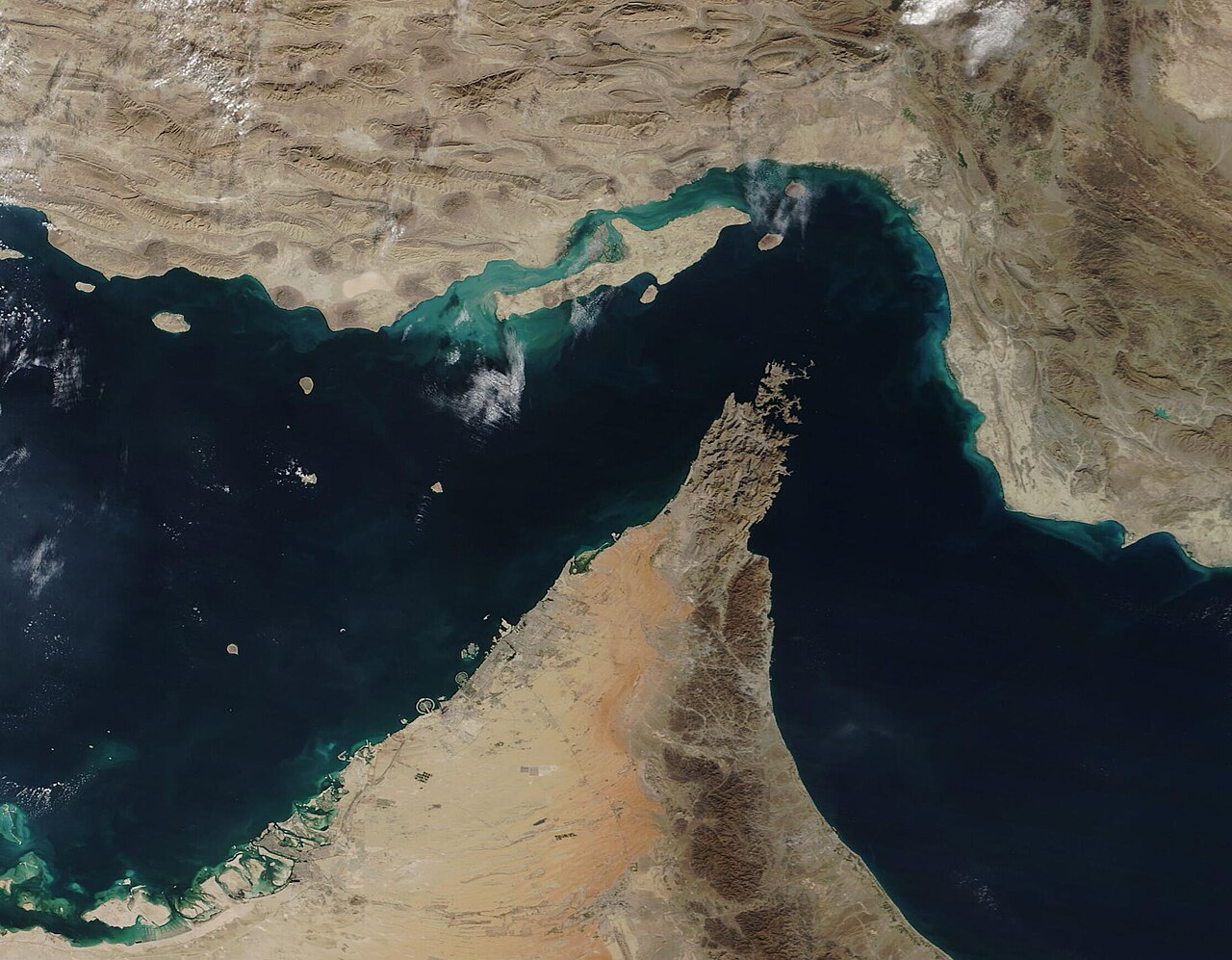
2. The Strait of Hormuz: Dual Blockade, Oil at $105
Since the collapse of the first round of talks on April 12, two blockades have overlapped. On one side, the US Navy intercepts ships entering or leaving the strait, cutting off Iranian oil revenues. On the other, Iran has threatened to mine the passage and has in some cases seized tankers in retaliation.
Trump pledged that the US Navy would destroy any vessel attempting to mine the Strait. A US-sanctioned supertanker nonetheless managed to transit despite the blockade, fueling market uncertainty. Brent crude peaked at $106 per barrel early this week before stabilizing around $105.
Analyst Hassan Ahmadian characterizes US naval activities as a repositioning of force rather than genuine economic pressure. The question for markets: how long can Iran absorb this blockade before yielding or escalating?
3. Human Toll: 3,400 Dead in Iran Since February 28
Iran’s forensics chief has established a partial toll since the start of US-Israeli strikes on February 28: nearly 3,400 people killed in Iran, alongside approximately 2,500 in Lebanon, 32 in Gulf states, and 23 in Israel. These figures, from Iranian authorities, remain difficult to verify independently.
The USS George H.W. Bush carrier arrived in the region, bringing to three the number of US carrier strike groups deployed in the Mediterranean and Gulf. Meanwhile, Israel carried out a strike on the margins of the Lebanon ceasefire, killing three people — provoking a Hezbollah rocket retaliation, in a cycle threatening the three-week truce announced by Trump.
4. Economic Sanctions: The Shadow Fleet in the Crosshairs
The US Treasury (OFAC) sanctioned on April 24 the Chinese refinery Hengli Petrochemical (Dalian) — China’s second-largest independent refinery and one of Iran’s main oil customers — along with roughly 40 companies and vessels belonging to Tehran’s shadow fleet.
These entities transported billions of dollars in Iranian crude oil, LPG, and petrochemical products, circumventing sanctions through flags of convenience and opaque payment circuits. The action is part of the Trump administration’s “maximum economic pressure” strategy, specifically targeting Asian buyers of Iranian hydrocarbons.
For Iran, which depends on these revenues to fund its budget and war effort, this new wave of sanctions represents serious strain — especially as the naval blockade already limits legal exports.
5. Internal Repression: Executions, Transfers, Intimidation
On the domestic front, the regime maintains constant pressure on the opposition.
Executions: Hamed Validi and Mohammad Masoum-Shahi, linked to the PMOI Resistance Units, were executed this week. Since March 19, at least ten political prisoners have been hanged, including six PMOI members and four participants in the January 2026 uprisings — executed “in utmost secrecy, without notice to families or lawyers,” according to Amnesty International.
Forced transfers: On April 13, seven political prisoners, including Miryousef Younesi (71) and Mehdi Vafaee (40), were violently transferred from Ward 7 of Evin Prison to solitary confinement at Ghezel Hesar. According to testimonies gathered by the NCRI, guards “forcibly shaved their heads and severely beat them with water hoses.”
Prison intimidation: Prison authorities threatened women inmates at Evin with solitary confinement and suspension of phone calls if they continued participating in the weekly “No to Executions Tuesdays” campaign.
Civil Society Under Pressure
Iranian schools remain closed for the 55th consecutive day, amid internet shutdowns maintained at 2% of normal levels according to several monitoring organizations. The government’s remote learning system (Shad) suffers from recurring infrastructure failures.
The murder of Fatemeh Zahra Hosseinbar, nine years old, whose mutilated body was found in Gasht (southeast Iran) after her abduction on April 17, sent shockwaves through an already traumatized Iranian society. The case raises questions about security conditions in peripheral regions during wartime.
In Berlin, the German government confirmed it would not receive Reza Pahlavi during his Bundestag visit — a diplomatic signal toward monarchists in exile.
Geopolitical Context
The current scenario revolves around four simultaneous axes: active warfare on Iranian and Lebanese soil, a maritime blockade slowly strangling the Iranian economy, indirect negotiations whose pace no one controls, and intensifying domestic repression as the regime seeks to crush all dissent during a period of vulnerability.
The US delegation in Islamabad must navigate between two pitfalls: appearing too conciliatory (which would reinforce Tehran’s position on Hormuz) or too intransigent (which would close the door to any deal). Iran is playing for time, knowing that every week without resolution increases oil pressure on US allies in Asia and Europe.
Key Takeaways
- Iran-US negotiations via Pakistan are progressing but without direct contact; the outcome remains uncertain.
- The Hormuz blockade keeps crude above $105/barrel, with persistent escalation risks.
- The US Treasury sanctions a major Chinese refinery and 40 phantom ships, tightening the economic vise.
- Domestic repression intensifies: 10 political prisoners executed since mid-March, violent transfers to Ghezel Hesar.
- 3,400 civilian and military dead in Iran since February 28 — a toll that continues to rise.
Sources
- Al Jazeera — Day 56: Situation after ceasefire extension
- NCRI — Iran News in Brief, April 25, 2026
- NPR — Iran’s FM awaits US delegation in Pakistan
- NBC News — Trump orders US to attack Iran boats mining Strait of Hormuz
- Al Jazeera — How long can Iran survive the US’s Hormuz blockade?
- Times of Israel — Iran says US looking for face-saving exit
- U.S. Treasury / OFAC — Sanctions on Hengli Petrochemical and shadow fleet
- France 24 — Political executions continue in Iran amid war