This article was generated by artificial intelligence and reviewed by Le Pivot's editorial team. We believe in transparency.
Hormuz Sealed, Cargo Seized, Peace in Limbo — April 20, 2026
By Le Pivot — Iran Monitor · April 19, 2026 · 10 min read
With forty-eight hours left before the April 7 ceasefire expires, the situation between Washington and Tehran is once again tipping toward escalation. The seizure of an Iranian cargo ship by a U.S. destroyer, Iran’s re-closure of the Strait of Hormuz, and the absence of any plan for a new negotiating round paint a bleak picture on April 20, 2026.
U.S. Seizes Cargo Ship Touska in Gulf of Oman
The USS Spruance destroyer fired on the engine of the Iranian cargo ship Touska before boarding and seizing it in the Gulf of Oman — an operation Trump announced via Truth Social on April 19. Iran immediately vowed to take “necessary measures” in retaliation, while saying it first needed to ensure the crew’s safety.
The incident marks a direct escalation: it is the first physical seizure of an Iranian vessel at sea since the conflict began. For Tehran, it constitutes a flagrant violation of the ceasefire that has been in effect since April 7.
Hormuz Sealed Again
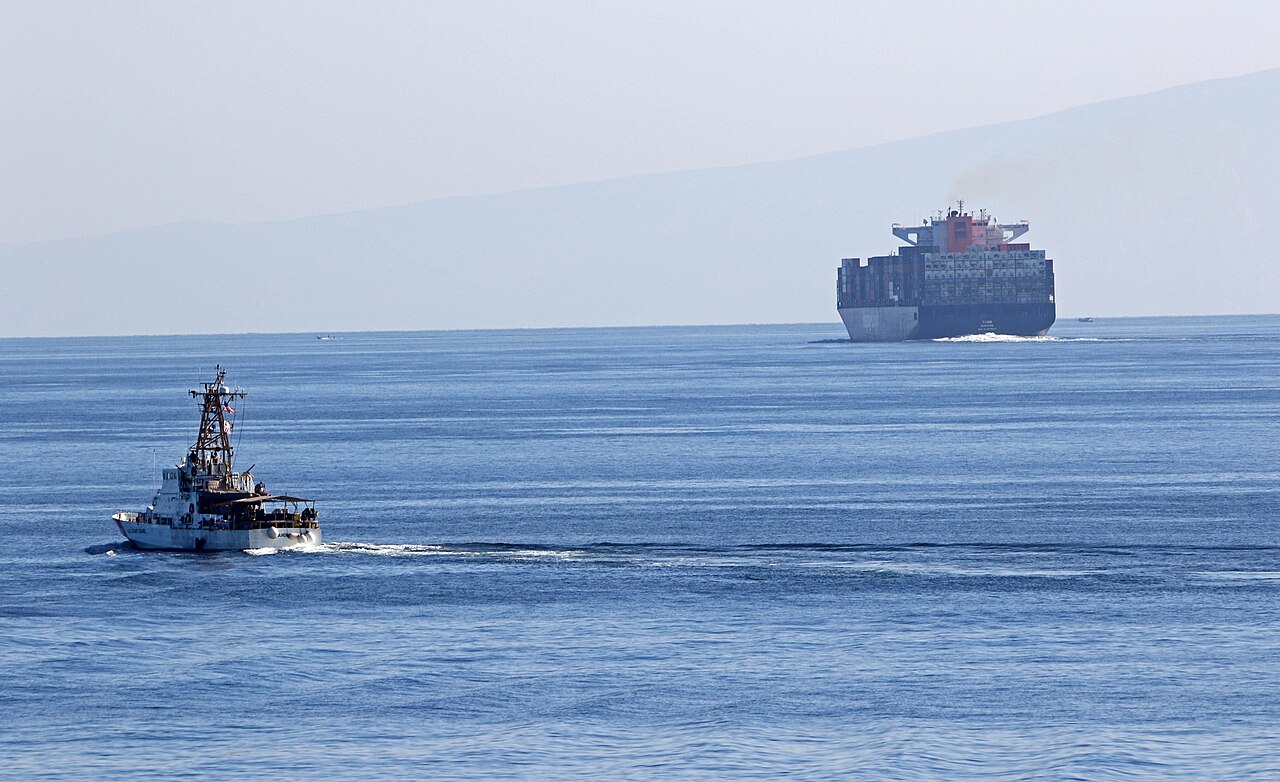
On April 17, Iran had announced it would reopen the Strait of Hormuz to commercial shipping for the duration of the truce. Twenty-four hours later, after Washington confirmed it was maintaining its naval blockade of Iranian ports, Tehran reversed course. A commercial vessel attempting to transit the strait came under Iranian warning fire.
Chief Iranian negotiator Mohammad Bagher Qalibaf put Iran’s position bluntly: “It is impossible for others to pass through Hormuz while we cannot.” The strait handles roughly 20 percent of global oil trade. Its closure forces hundreds of tankers to reroute around the Cape of Good Hope, adding weeks to each voyage.
No Plan for New Negotiations
Iranian Foreign Ministry spokesman Esmail Baghaei was categorical at an April 20 press conference: there is “no plan, no decision” regarding a next round of talks. Iran accuses the United States of continuously violating the ceasefire by maintaining the naval blockade and oil sanctions.
The first Islamabad round (April 11–12) lasted more than twenty hours without producing a memorandum. Iran’s main sticking points: the right to levy transit fees through the strait, the unfreezing of $6 billion in blocked assets, and an end to Israeli strikes on Hezbollah.
Trump: Fresh Threats and Another Delegation to Islamabad
Trump is simultaneously hardening his rhetoric and relaunching diplomacy. He threatened to “destroy every power plant and every bridge in Iran” if Tehran refuses his offer, while on April 19 announcing the return of his delegation to Islamabad on Monday, April 20 — led by JD Vance, Steve Witkoff, and Jared Kushner. This dual signal muddies the waters and complicates the task of Pakistan’s mediators.
Civil Society: Prison Strikes and Diaspora Protests
Beyond the capitals and diplomatic corridors, mobilization continues on two distinct fronts.
Inside Iran, the “No to Executions Tuesdays” campaign has reached its 116th consecutive week, with hunger strikes reported in 56 prisons. Human rights networks report an acceleration of political executions since open conflict began.
In the diaspora, demonstrations have taken place in dozens of cities: Washington D.C., Los Angeles, Toronto, Montreal, Paris, Berlin, London, and Geneva. Some rallies opposed U.S. and Israeli intervention; others expressed opposition to the Tehran regime and solidarity with political prisoners.
Geopolitical Context: The Economy on the Front Line
Economically, the conflict has triggered the most significant oil supply disruption in recent market history. The U.S. Treasury reimposed sanctions on Iranian exports after a temporary one-month waiver had allowed approximately 140 million barrels of offshore storage to be drawn down. Iran normally exports around 1.5 million barrels per day — a volume now largely blocked or reroutable only at great cost.
The Persian Gulf and its alternatives are commanding the attention of analysts: if the Strait of Hormuz remains closed, projections point to lasting disruptions in fuel prices across Europe and Southeast Asia by the summer of 2026.
Key Takeaways
The April 7 ceasefire expires in 48 hours. Tehran says there is no plan for a next round. Washington maintains the blockade while sending a delegation to Islamabad. A naval seizure has been added to the incident ledger. The Strait of Hormuz is closed again.
The window for avoiding a return to hostilities is narrow. April 22 will be decisive.
Sources
- NPR — U.S. Navy seizes Iranian cargo ship in Gulf of Oman (April 19, 2026)
- CNN — Iran closes Strait of Hormuz again after U.S. maintains blockade (April 18–19, 2026)
- CNN — New threats and tensions rattle Iran ceasefire (April 20, 2026)
- NBC News — Live updates: Iran vows retaliation over seized cargo ship (April 20, 2026)
- Al Jazeera — What to know about the US-Iran standoff over the Strait of Hormuz (April 19, 2026)
- Time — Why the Iran-U.S. Peace Talks Failed at Islamabad (April 13, 2026)
- CNN Business — The economic game of chicken between Iran and the U.S. (April 14, 2026)
- NCRI — Iran News in Brief, April 20, 2026