This article was generated by artificial intelligence and reviewed by Le Pivot's editorial team. We believe in transparency.
Iran, Day 10: Mojtaba Khamenei Named Supreme Leader as Tehran Burns
By Le Pivot — Iran Monitor · March 8, 2026 · 10 min read
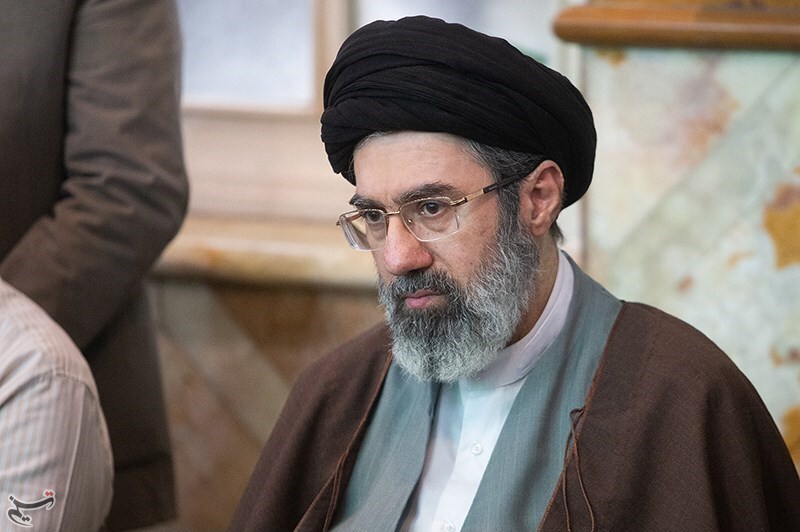
Day ten of war. The sirens have not stopped in Tehran since February 28, when the first US-Israeli strikes killed Ayatollah Ali Khamenei. On this Sunday, March 9, the Iranian capital wakes once again under a thick cloud of black smoke — the direct result of Israeli bombardments on the Sharan and Shar Rey oil depots, in the heart of the metropolitan area. Meanwhile, the Assembly of Experts has chosen a successor: Mojtaba Khamenei, son of the late Supreme Leader, becomes the third leader of the Islamic Republic since its founding in 1979.
A New Supreme Leader in Wartime
The announcement, broadcast Saturday, March 8 on state television, marks a major political turning point. Mojtaba Khamenei, long in his father’s shadow, rises to power under the most difficult circumstances Iran has faced since the Iran-Iraq War (1980–1988). The Assembly of Experts, the clerical body responsible for selecting the Supreme Leader, voted with a majority of its members in his favour.
The dynastic appointment — a first in the history of the Islamic Republic — raises questions about the new leader’s legitimacy. Several analysts note that the choice primarily reflects a survival instinct from the regime, seeking to project continuity of power amid military chaos. Revolutionary Guards commanders and political leaders quickly pledged allegiance to the new Supreme Leader (NPR, Al Jazeera).
Strikes on Oil Facilities: Tehran Chokes
For the first time since the conflict began, Iranian oil infrastructure has been directly targeted. Israeli strikes hit the Sharan and Shar Rey fuel depots, triggering massive fires visible from dozens of kilometres away. Tehran residents woke Sunday to toxic smoke, according to semi-official news agency Fars.
These strikes are part of a deliberate escalation: after neutralizing air defence capabilities and military sites in the early days, the US-Israeli coalition is now targeting the country’s economic arteries. The message is clear — suffocate Iran’s war economy (France Info, CNN).
Iran Retaliates Across the Gulf
Iran’s response was swift. Over the past 24 hours, Iranian forces expanded the theatre of operations by striking infrastructure in several Gulf countries. Fuel tanks at Kuwait’s international airport were hit, and Bahraini authorities report damage to a desalination plant. The UAE intercepted a missile, while Saudi Arabia, Qatar, and the UAE continue to face attacks on American military installations on their soil.
Iranian President Masoud Pezeshkian declared that Iran would cease strikes against neighbouring countries if no attacks were launched from their territory — an ambiguous diplomatic signal, between threat and overture (Al Jazeera).
Humanitarian Crisis and Human Toll
The death toll continues to mount. According to the US-based Human Rights Activists News Agency (HRANA), at least 1,205 civilians have been killed in Iran since the conflict began, including 194 children — a figure as of Saturday evening, March 8. Actual losses could be considerably higher, with communications disrupted in several provinces.
The situation of the 2.6 million Afghan refugees in Iran is particularly concerning. Already weakened by 2025 deportation campaigns, they find themselves trapped in a conflict that is not their own. Population displacement is accelerating, while regional airspace remains partially closed — over 52,000 Indian nationals were evacuated between March 1 and 7 (The New Humanitarian).
Oil Markets in Turmoil
The global economic impact is already considerable. Brent crude surged more than 30% in a single week, briefly exceeding $119 per barrel on Sunday before settling around $113 on Monday. Saudi Arabia and other major Gulf producers have cut output, while tanker traffic through the Strait of Hormuz — through which approximately 20% of the world’s oil transits — has ground to a near halt.
For Canada, this price surge is already translating into higher prices at the pump and reigniting debates about North American energy sovereignty. Goldman Sachs and Bloomberg anticipate crude remaining durably above $100 if the conflict extends beyond March (Bloomberg, Fortune, Goldman Sachs).
Key Takeaways
The appointment of Mojtaba Khamenei during wartime illustrates the Iranian regime’s determination to maintain a façade of stability, but the dynastic transfer of supreme power is unprecedented and could undermine its internal legitimacy. Militarily, the expansion of strikes to oil infrastructure and Iran’s retaliation across the Gulf signal an escalation that pushes any prospect of a ceasefire further away. With more than 1,200 civilians killed in ten days and oil above $110 a barrel, the humanitarian and economic consequences of this conflict already extend far beyond Iran’s borders. Historian Pierre Razoux assesses that “a prolonged stalemate is now the most likely scenario” — a prospect that should concern diplomats and markets alike.